🌿 What Does Real Rest Mean?
In high-performance cultures, rest is often mistaken for indulgence or escape. But true rest is not distraction — it is nervous system regulation. In this reflection, Jiu Jian explores the deeper meaning of rest through the ancient symbolism of the Chinese character 休, modern neuroscience on forest bathing, and the role of breath and inner sound in restoring balance. From leaning against a tree to activating the vagus nerve through mindful vocal practice, this article offers a sustainable approach to recovery, clarity, and long-term leadership resilience.
MINDFULNESS & AWARENESS 正念与觉知 ✔ MINDFULNESS VOCAL 正念之声 ✔ HEALING JOURNEY 疗愈旅程
Jiu Jian 玖健
2/25/20262 min read
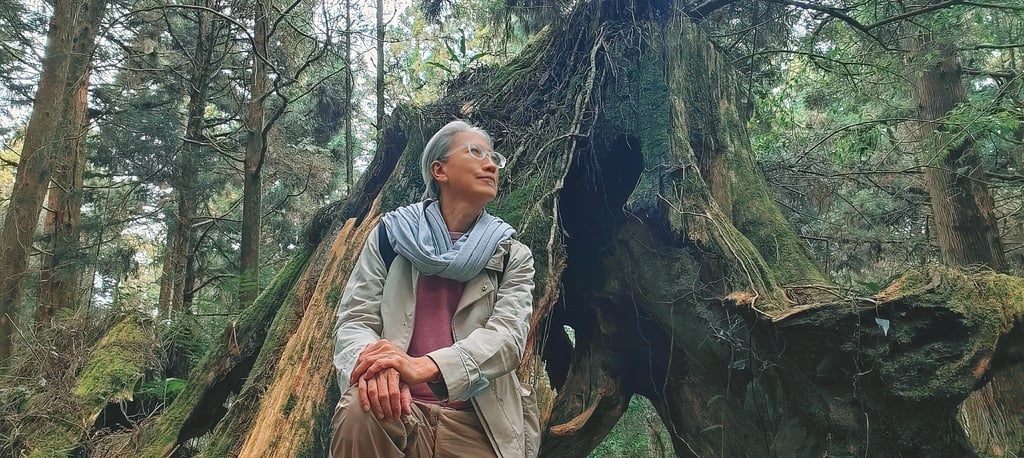
2025 Taiwan Island-Wide Journey — Alishan (阿里山)
Before the Next Sprint, What Is Rest?
During festive breaks such as Lunar New Year, many professionals speak about “recharging” before returning to work.
Employees recover.
Entrepreneurs reset.
Business leaders pause before the next quarter.
Yet a deeper question remains:
What does real rest actually mean?
Modern rest often looks like stimulation in disguise:
• Scrolling late into the night
• Endless streaming
• Overindulging in food and social activities
• Traveling without slowing the nervous system
The body may stop working.
But the mind remains activated.
The nervous system stays alert.
When the holiday ends, fatigue simply changes form.
Perhaps rest is not about stopping activity.
Perhaps it is about restoring regulation.
The Original Meaning of “Rest”
In Chinese, the character for rest (休) depicts a person beside a tree.
In ancient script, it represented a field worker pausing under shade after labor — seeking shelter from sun and rain.
It was not leisure in the modern sense.
It was physical relief.
The companion character (息) relates to breath.
Together, they suggest something profound:
Rest is not merely ceasing effort.
It is allowing the body to settle and the breath to soften.
In other words:
Rest in the body.
Stillness in the heart.
Why Nature Regulates the Nervous System
Modern neuroscience supports what ancient cultures intuitively understood.
Research on forest bathing (Shinrin-yoku) demonstrates measurable physiological effects:
• Reduced cortisol (stress hormone)
• Lower blood pressure
• Slower heart rate
• Activation of the parasympathetic nervous system
Natural environments calm the amygdala — the brain’s alarm center.
Trees do not solve our deadlines.
They quiet the alarm response.
And when the alarm quiets, recovery begins.
For professionals and leaders, this matters deeply.
Performance without regulation leads to burnout.
Sustainable success requires nervous system balance.
Tree Pose and Embodied Stability
In yoga, Tree Pose (Vrikshasana) reflects this same principle.
Standing on one leg, breath steady, gaze focused —
it trains balance without rigidity.
True stability is not tension.
It is calm alignment.
In leadership and in life, steadiness is not force.
It is centered presence.
Mindfulness Vocal: Inner Sound as Regulation
At Jiu Jian’s Mindfulness Vocal & Healing Sanctuary, sound is not limited to vocal performance.
It refers to inner resonance —
the subtle awareness of breath, body, and emotional rhythm.
Soft humming or extended exhalation stimulates the vagus nerve, activating the parasympathetic system and supporting recovery.
Yet inner sound does not always need to be audible.
It may simply be the quiet noticing of one’s own breathing.
The internal rhythm returning to balance.
When inner resonance stabilizes, the body softens.
Not performance.
But repositioning.
Not escape.
But return.
Rest as Professional Maturity
In high-performance cultures, rest is often mistaken for weakness.
In reality, the ability to regulate one’s nervous system is a mark of maturity.
When anxiety rises — notice.
When fatigue appears — allow pause.
When inner noise grows loud — return to breath.
Rest is not indulgence.
It is intelligent recovery.
And intelligent recovery sustains clarity, leadership, and long-term contribution.
Closing Reflection
Perhaps real rest is neither indulgence nor escape.
It may simply be this:
Leaning.
Breathing.
Returning.
When a person leans on a tree, there is ease.
Rest in the body.
Stillness in the heart.
Jiu Jian
Founder, Jiu Jian’s Mindfulness Vocal & Healing Sanctuary
Clarity · Awakening · Transformation
Let Healing Begin with the Sound